2026 Guide to Offshore Drone Inspections:  Challenges, Regulations, and the Shift to Remote Offshore Surveys

The offshore energy and marine industries operate under extreme conditions and are constantly battling corrosion and structural fatigue. To guarantee the safety of their assets, offshore maintenance teams periodically perform General Visual Inspections (GVI), Close-up Visual Inspections (CVI), Corrosion Mapping, and Ultrasonic Thickness Measurements (UTMs) to verify the integrity of their assets. Due to the harsh areas where these inspections take place, operators are rapidly phasing out high-risk manual surveys in favor of advanced offshore drone inspections. Deploying remote aerial vehicles across offshore rigs, vessels, FPSOs, FSRUs, FSOs, and offshore wind turbines has helped operators increase the safety, efficiency, and data quality of their offshore inspections.
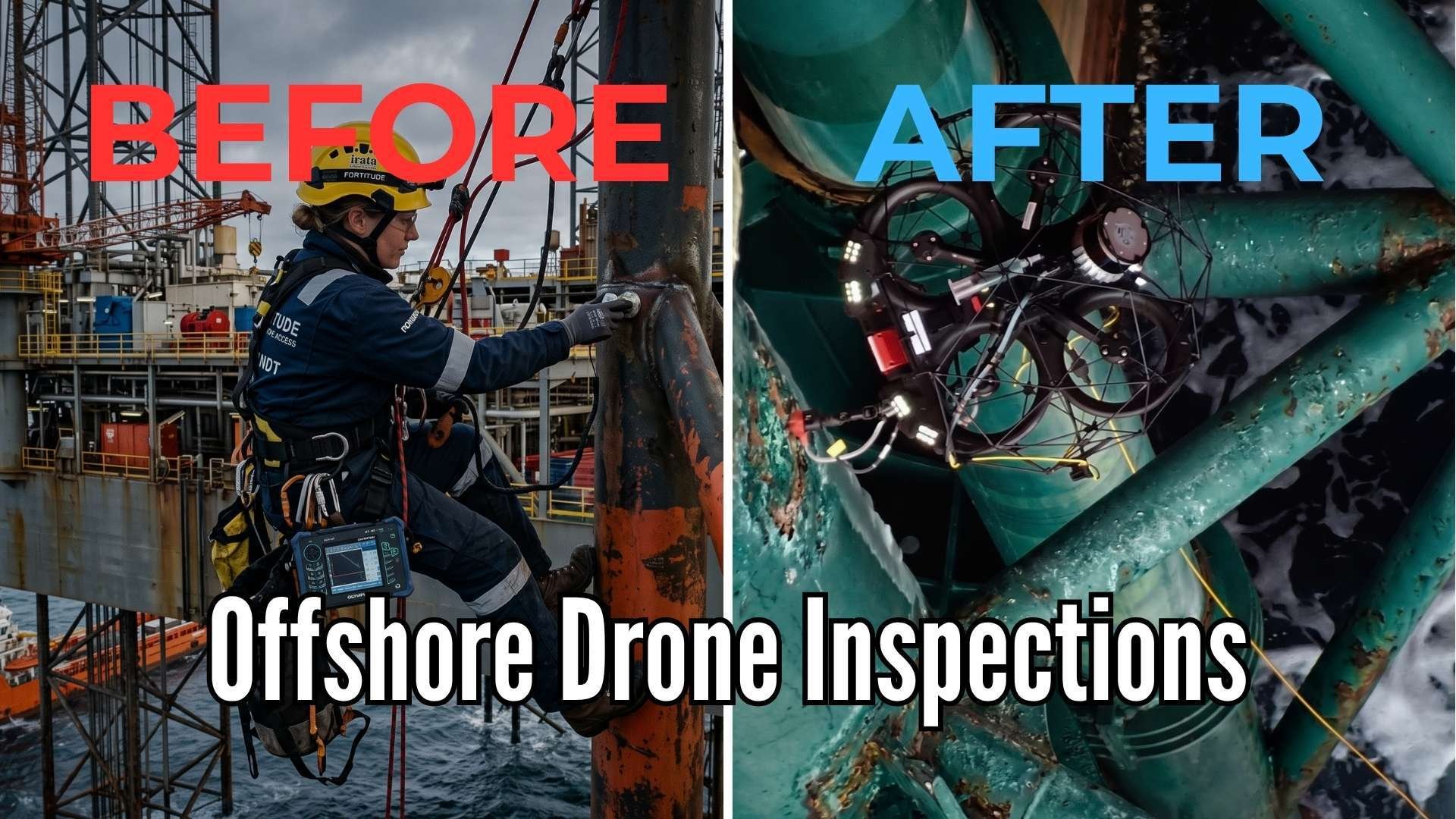
Rope Access VS Drone Inspection Offshore

 Rope access inspection compared to an offshore drone inspection


Table of Contents:

  1. What are Offshore Drone Inspections?

  2. How are Drones Being Used for Offshore Inspections?

  3. The Benefits of Drones for Offshore Inspections

  4. What is the Best Drone for Offshore Inspections?

  5. The Rise of NDT Drones for Offshore Inspections


What are Offshore Drone Inspections? 

In the global energy and marine sectors, offshore inspections represent the vital operational baseline required to guarantee structural integrity, environmental safety, and regulatory compliance of all offshore structures. However, complex environmental conditions and limited physical access make inspection work complex. Traditionally relying on extensive scaffolding or rope access, while effective, these methods carry substantial financial burdens, long logistical lead times, and undeniable safety hazards.

An offshore drone inspection is the practice of deploying specialized Unmanned Aerial Vehicles (UAVs), like the Elios 3 UT, to remotely inspect critical areas of offshore vessels such as oil and gas platforms (MOPUs), Floating Production Storage and Offloading (FPSO) Units, Floating Storage Regasification Units (FSRUs), and offshore wind turbines. These drones are engineered to withstand collisions and maneuver inside confined or cluttered spaces and remotely collect the data required by industry standards and classification society guidelines, thanks to specialized built-in payloads.
A common example of an offshore drone inspection is the splash zone. These areas face the highest corrosion rates of offshore rigs and wind turbines, and allow limited physical reach to rope access technicians. Additionally, tide changes and heavy seas leave narrow operational windows for human inspectors to reach them. Offshore operators can now send an
NDT inspection drone to conduct the survey remotely, with minimal exposure to risk.

So how do the two methods compare:


Rope-Access / Boat Access

Offshore Drone Inspection

Inspection Time

3 to 7 days

2 to 4 hours

Crew Footprint

4 to 6 specialized technicians

2 operators on-deck

Human Exposure

High (suspended over open swells)

Zero (operators remain on deck)

Data Delivered

Manual photos & handwritten notes

4K visuals, Localized UTMs, & 3D model


How are Drones Used for Offshore Inspections?

To overcome the challenges of traditional inspection methods for evaluating the integrity of offshore assets, the oil and gas industry has turned towards Remote Inspection Techniques (RITs), like offshore drones. Remote Inspection Techniques involve deploying unmanned platforms like drones, ROVs, and robotic crawlers to conduct structural close-up surveys and Non-Destructive Testing (NDT), typically in confined or hazardous spaces. RITs allow surveyors to evaluate vessel conditions without physically entering the space, enhancing safety and reducing survey downtime and costs.

The implementation of offshore drone inspections has redefined how data is acquired across vast and highly dangerous industrial environments. In 2026, the American Bureau of Shipping refers to RITs as “an alternative means of access. These technologies can help reduce safety risks to surveyors [...] and inspectors by reducing the need for surveyors/inspectors to access potentially hazardous locations at height, in confined spaces, or other hazardous inspection areas. RITs can be used to reduce the amount of preparation and time required for inspections, thereby also reducing operating expenses for operators.”

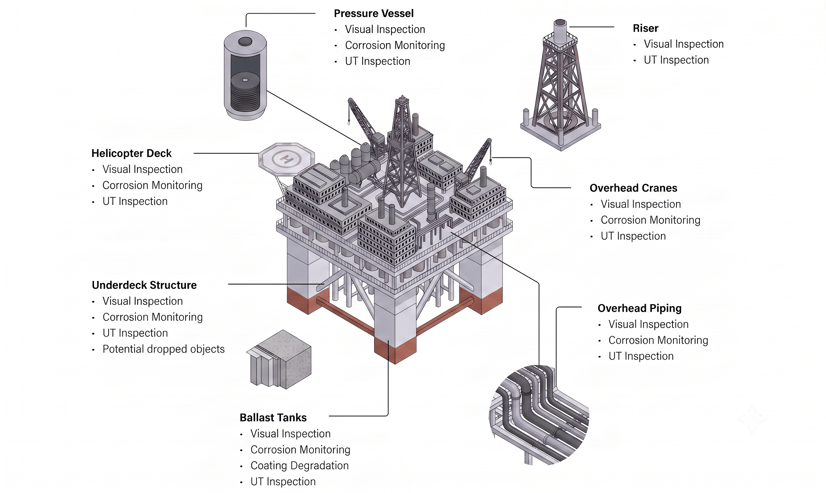
Offshore inspection drones are being used across many offshore vessels as an alternative inspection method to rope-access, scaffolding, and manlifts. One of the major applications for these drones is offshore oil platforms, also known as oil rigs or Mobile Offshore Production Units (MOPUs), where they are used to inspect the splash zones, ballast tanks, overhead piping, risers, helicopter deck, pressure vessels, and overhead cranes:

Main applications for offshore drone inspections on oil rigs and platforms.

Main applications for offshore drone inspections on oil rigs and platforms.


See how Shell and offshore asset integrity experts, CAN, are redefining inspections onboard Shell’s Offshore Platforms: https://www.flyability.com/casestudies/offshore-inspections-at-shell-with-elios-3-ndt-drone. In this case study, Shell shares that “Once a manual operation, drones are providing a safer, more time-efficient option to inspect offshore platforms, helping keep the lights on at home.”

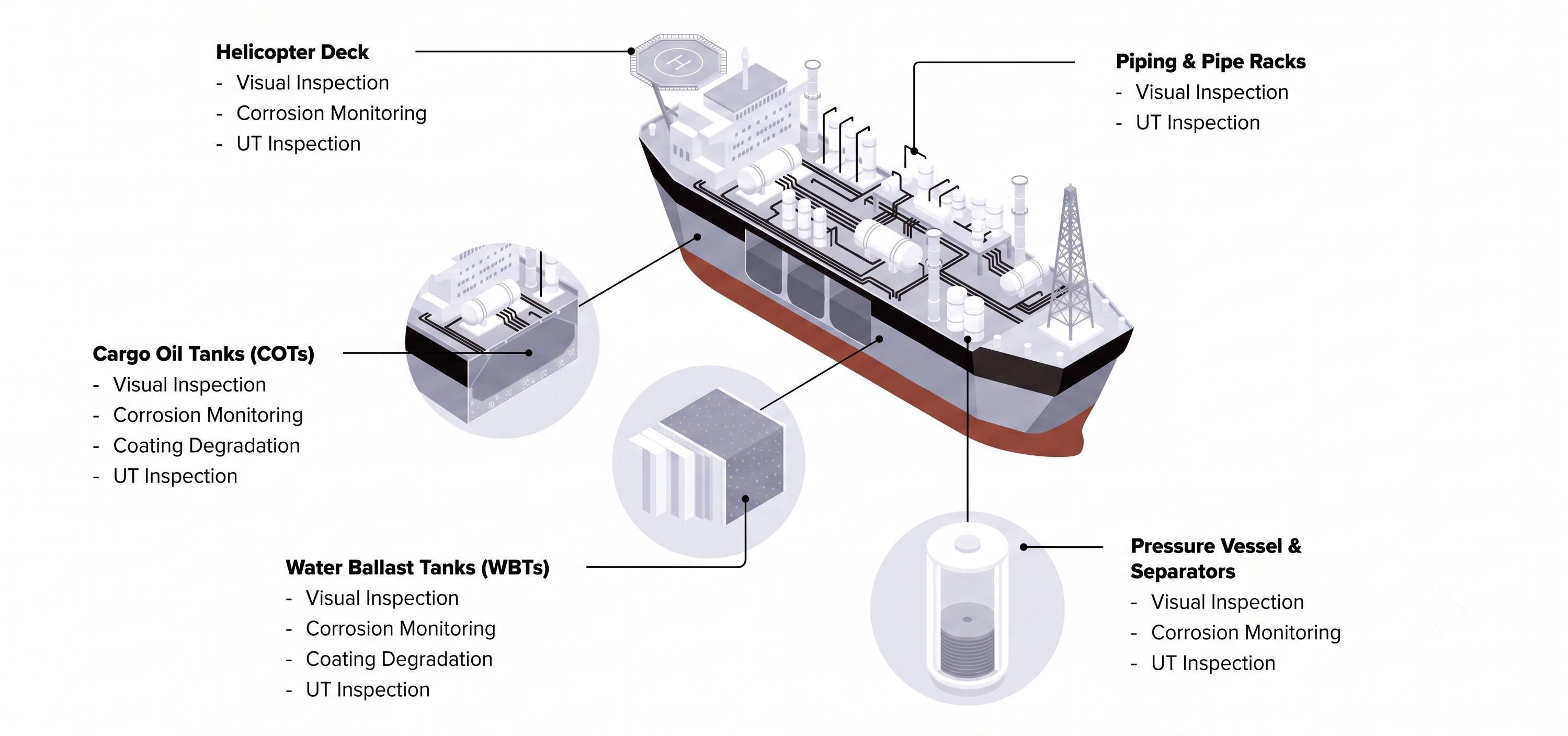
Another common application for offshore drone inspections are FPSOs, FSOs, and FSRUs. Here, drones are being used to collect class-compliant data inside the Cargo Oil Tanks (COTs), Water Ballast Tanks (WBTs), Pressure Vessels, Separators, Risers, and other confined or cluttered spaces. In a recent interview, SAIPEM, leaders in offshore engineering services, tested the Elios 3 UT drone to perform COT and WBT inspections, which resulted in a class-approved inspection that was 80-90% faster and with zero human entry

Main applications for offshore drone inspections on FPSOs.

Main applications for offshore drone inspections on FPSOs.

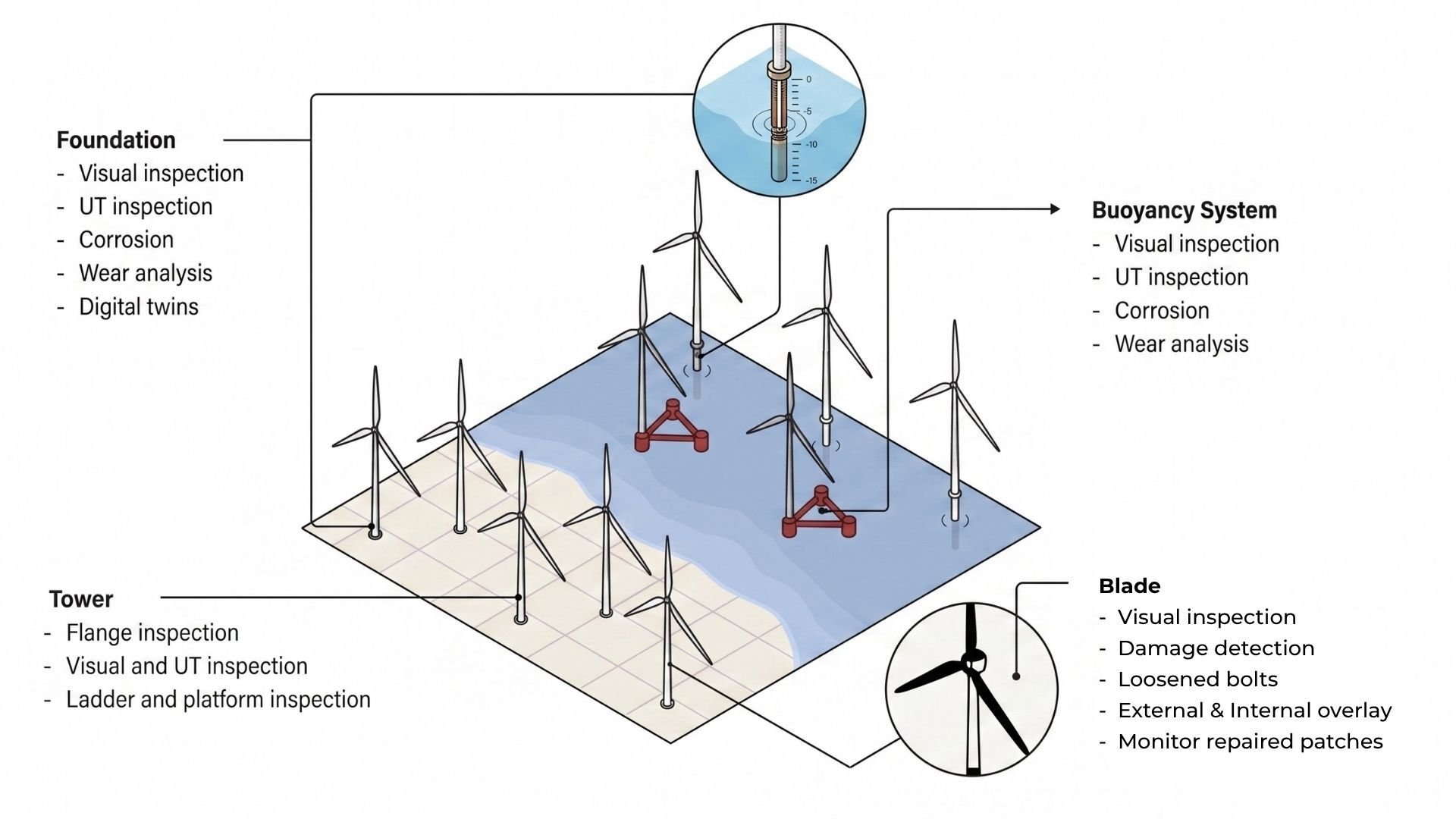
Finally, another common application for drones in the offshore industry is offshore wind turbines, where drones can be used to fly inside the wind blades to detect any damage from lightning strikes or other structural damage. It is estimated that 80% of wind blade damage can only be seen from inside the blade, making it common practice to send humans or, more safely, use drones to perform inspections inside these blades.

Main applications for drone inspections in offshore wind turbines.

Main applications for drone inspections in offshore wind turbines.


Applications of offshore inspection drones: https://www.flyability.com/infographics/elios-3-applications-in-oil-and-gas.


The Benefits of Drones for Offshore Inspections

An offshore inspection drone is a highly specialized unmanned aerial vehicle (UAV) engineered to evaluate the structural integrity of offshore assets without putting human inspectors in harm's way. Integrating drone inspection solutions into offshore maintenance programs, especially when equipped with NDT sensors like the Elios 3 UT, delivers five major benefits for offshore asset managers:

  1. Safer Offshore Inspections with Drones
  2. Reducing Offshore Downtime by Up to 80% with the Elios 3 Drone
  3. Lowering Offshore Inspection Costs with NDT Drones
  4. Drones are Providing More Reliable Data From Offshore Inspections
  5. The Rise of NDT Drones for Offshore Inspections

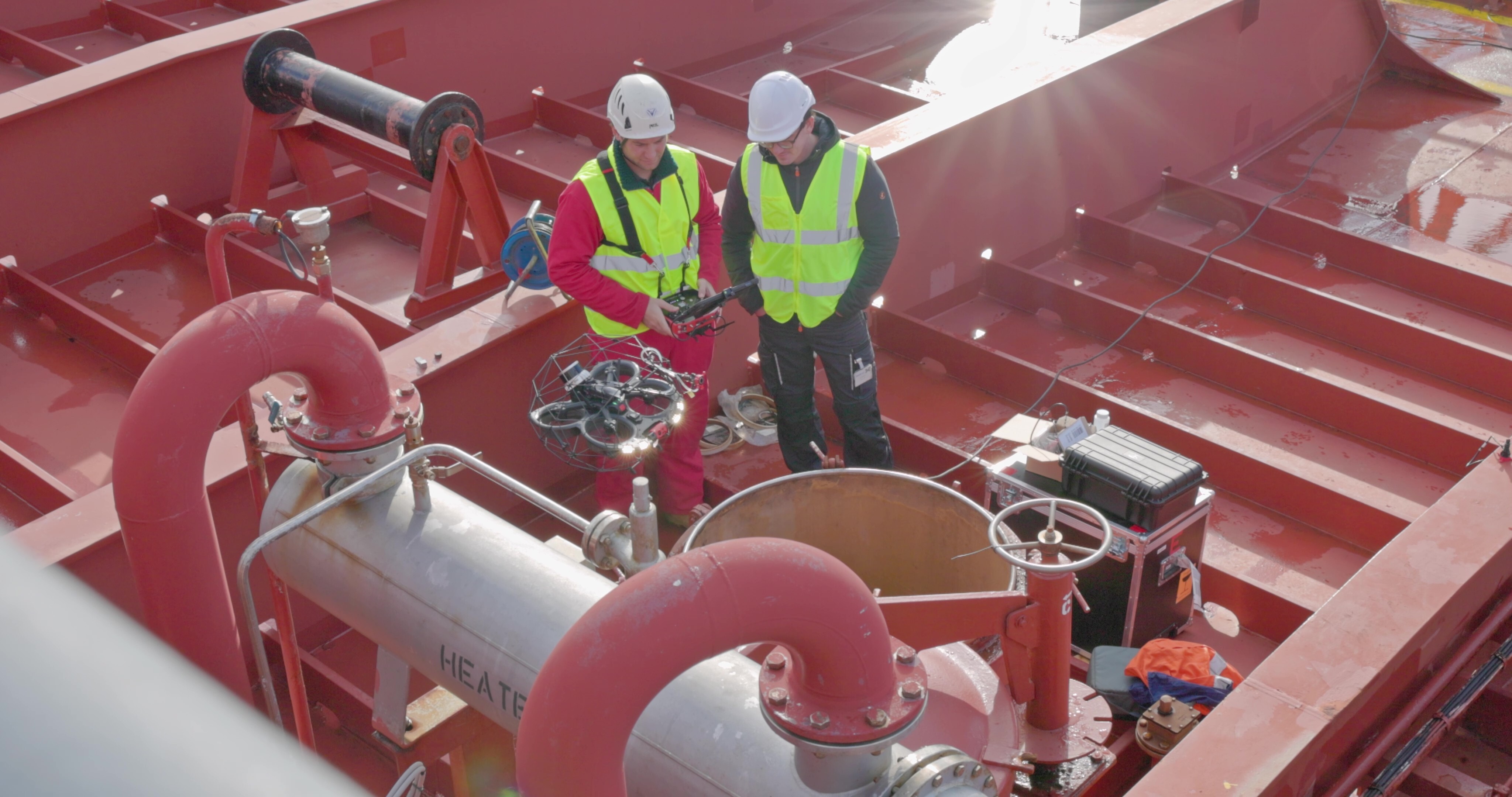
The Elios 3 UT Entering a Cargo Oil Tank for an Offshore Inspection with Drones

The Elios 3 UT Entering a Cargo Oil Tank for an Offshore Inspection with Drones. 

1. Safer Offshore Inspections with Drones

Offshore structural monitoring traditionally demands that human inspectors work at height, operate over open water, or execute Confined Space Entry (CSE) into low-oxygen interior environments. By deploying offshore inspection drones, asset managers minimize the risks their inspection team is exposed to. Elios 3 UT pilots can safely operate the drone while standing on the deck.

Real-World Impact: Since 2023, drones have been supporting BP’s offshore operations and have saved over 1700 hours of confined space work, reducing the risk of potential injury and enabling increased access to hard-to-reach areas. Watch more on BP’s video.

2. Reducing Offshore Downtime by Up to 80% with the Elios 3 Drone

A manual inspection of an FPSO tank or an oil platform riser can take weeks of preparation, set-up, and entry permits, which can lead to prolonged downtime. Drones can inspect the same areas in a fraction of the time, with minimal disruption to productivity, thanks to the elimination of scaffold setup and rope access preparation. Additionally, by removing human entry into confined spaces, entry permits are significantly streamlined. This efficiency is highlighted in an interview on remote drone inspections with Bureau Veritas Marine & Offshore President, Alexander Gregg-Smith.

Real-World Impact: In a recent case study, a spokesperson from Shell shared that “not only are drones safer, but they are also time-efficient. Previous rope access inspections could have taken an entire day, and now inspections can be accomplished in minutes.” Read the full 2026 case study on offshore drone inspections at Shell: https://www.flyability.com/casestudies/offshore-inspections-at-shell-with-elios-3-ndt-drone

3. Lowering Offshore Inspection Costs with NDT Drones

Traditional asset inspection structures require millions of dollars in scaffolding erection, specialized logistics, and prolonged facility shutdowns. Robotic data collection slashes these costs, optimizing operational budgets as detailed in Flyability’s breakdown of the benefits of drone inspections in oil and gas.

Real-World Impact: TotalEnergies has integrated Elios 3 drones into their hull digitalization project for their offshore FPSO inspections. This approach not only enhances safety and data quality but also delivers a 45% cost reduction compared to traditional human inspections. Watch more on TotalEnergies’s testimonial video.

4. Drones are Providing More Reliable Data From Offshore Inspections

Operating offshore means adhering to strict frameworks of international maritime laws and safety guidelines. Asset owners cannot operate without class certification, meaning that the data collected during inspections must satisfy the requirements of the class surveyors. Major classification societies like ABS, Bureau Veritas, Lloyds Register, ClassNK, DNV, RINA, and others have updated their rulebooks to formally accept the use of RITs for offshore inspections, allowing drones like the Elios 3 UT to fulfill class surveys in place of traditional methods.

Real-World Impact: Across several field trials, the American Bureau of Shipping (ABS) has assessed and accepted the Elios 3 UT as a data collection tool for class inspections. ABS stated that “Following intensive assessments by ABS, Flyability’s Elios 3 UT proved to operate satisfactorily in all the tests we subjected it to, including flying inside tanks, hulls and confined spaces on ships. This recognition means that the Elios 3 UT is suitable for use by ABS-approved service suppliers inspecting marine and offshore assets.” Read the full report from ABS: https://www.flyability.com/blog/abs-approves-elios-3-class-inspections

By capturing real-time structural data remotely, offshore drones replace slow, expensive, and high-risk legacy methods like scaffolding and rope access, keeping maintenance crews safe while drastically reducing operational downtime and inspection costs.


What is the Best Drone for Offshore Inspections?

Determining the best drone for offshore inspections depends a lot on the application you have in mind, but for many demanding offshore environments, like confined spaces or outdoor cluttered areas, the industry standard is the Flyability Elios 3 UT.

The Elios 3 UT is the best drone for offshore inspections in confined spaces and outdoor cluttered spaces

The Elios 3 UT is the best drone for offshore inspections in confined spaces and outdoor cluttered spaces.

But why is the Elios 3 UT the best drone for offshore inspections? Here are five reasons why:

  • With the Elios 3 UT, you can reach places no other drone can: Purpose-built to manage indoor and outdoor inspections of complex areas, the Elios 3 UT features a robust, collision-resilient cage and an advanced LiDAR stabilization system. This allows the drone to operate reliably inside COTs, complex ballast spaces, and wind turbine blades without risking asset damage or catastrophic flight failure.

  • The Elios 3 UT is a trusted tool among major oil and gas producers: In the last few years, 8 out of the 10 biggest oil and gas producers have used an Elios drone to carry out an inspection at their plant or offshore facility. This includes the likes of Chevron, Shell, BP, Saudi Aramco, ExxonMobil, Equinor, TotalEnergies, ConocoPhillips, Petrobras, and many more. In 2025, Flyability's Elios 3 UT was also voted by users the best Safety Technology for Offshore and Marine Operations by the Offshore Support Journal.

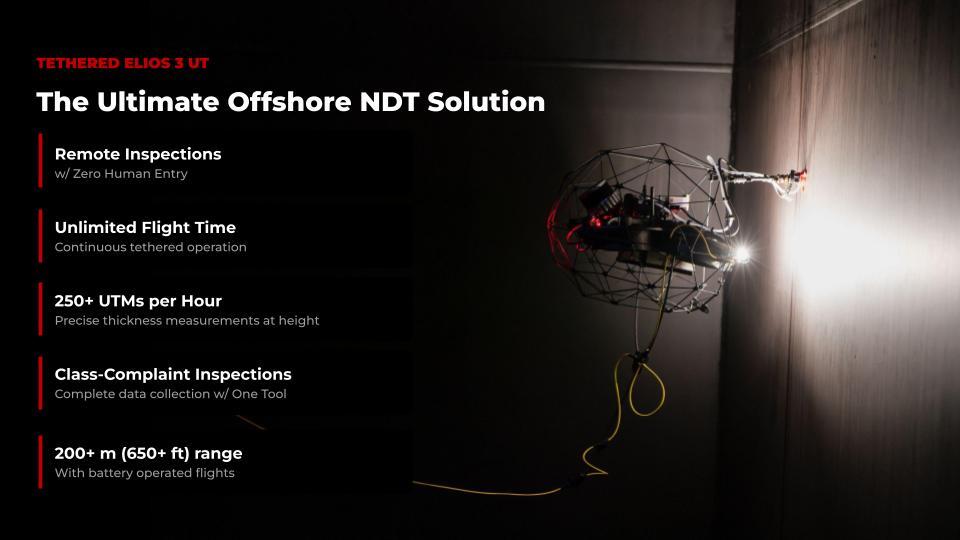
  • Fly tethered or with batteries for optimal versatility: The Elios 3 allows operators to easily swap between tethered or battery-powered flight. This is extremely important in offshore environments because the combination allows operators to benefit from extended flight time with the tether and the longer flight range of batteries (100+ m, 330+ ft). At the same time, being tethered allows pilots to fly more confidently above open water as the cable can be used as a retrieval leash, while batteries allow them to fly in complex areas without the risk of entanglements or snags.

  • Collect class-compliant close-up visuals and UTMs with the Elios 3 UT: The Elios 3 UT is equipped with a 4K camera for performing CVIs and GVIs, and integrates a specialized Cygnus Instruments ultrasonic testing payload, which is renowned for its reliability among offshore customers. The Elios 3 UT enables operators to perform remote class-approved inspections. See here how RINA Offshore and Flyability tested and validated the Elios 3 UT for offshore inspections onboard an FPSO.

  • Customer-proven field success of the Elios 3 UT: Across the large pool of Flyability’s offshore customers, many have recorded very successful integrations of drones like the Elios 3 UT into their inspection workflow. For example, “using robots for tank inspections has saved Chevron more than $92 million and approximately 143,000 working hours in 2024 and 2025”.

The Rise of NDT Drones for Offshore Inspections

While standard aerial platforms excel at capturing high-definition visual imagery and thermal anomalies from a distance, maintenance engineers and surveyors require more than visual data to sign off on offshore structural integrity. They require quantitative data regarding material thickness and subsurface anomalies. This critical requirement has driven the transition from purely visual aerial systems to advanced, contact-based NDT drone (Non-Destructive Testing) platforms. Equipped with specialized payloads, an NDT drone bridges the gap between remote visual tools and traditional hand-held material testing.

The rise of NDT drones for offshore inspections hasn’t been limited to the operational side. Regulators are now also catching up with this new trend. In fact, the International Maritime Organization (IMO) now defines RITs as “an alternative means for close-up survey of the structure of ships. The use of RIT (such as drones, remotely operated vehicles and robotic arms) to survey the structure of ships greatly enhances the safety of personnel.” The update also came in the IMO guidelines, which provide guidance for the safe use of remote inspection tools, such as drones or robotic devices, to help surveyors inspect hard-to-reach parts of a ship’s structure during inspections required by the International Code on the Enhanced Programme of Inspections During Surveys of Bulk Carriers and Oil Tankers (2011 ESP Code).

Transitioning to an inspection workflow powered by the Flyability Elios 3 UT is more than a simple technology upgrade; it is a critical evolution in offshore safety, regulatory compliance, life-extension programs, and maintenance. By deploying the industry’s leading UT drone, offshore operators can confidently navigate complex structures, protect their workforces, and optimize production uptime.


Find out more about offshore drone inspections at https://www.flyability.com/oil-and-gas-drones.


Table of contents

    SEE ALSO