Oil & Gas
 Maritime
 Power Gen
 Chemicals
 Mining
 Sewers
 Cement
 Nuclear
 Infrastructure


 EN
EN
Automated Bridge Inspection and Photogrammetry with the Elios 3 and AutoScan
When a railway bridge across water proved difficult to access for an internal inspection, the Elios 3 provided the perfect solution to gather visual data while keeping operators safe.
Benefits In A Nutshell
|
Access The Elios 3 enabled Gedeon GRC Consulting (Gedeon GRC) to inspect bridge components above a freeway that traditional inspection methods could not reach without driving up costs. |
Safety Drone-based inspection reduced the need for personnel to work close to elevated structural elements and helped limit reliance on access equipment near the roadway. |
|
Consistent data capture AutoScan automated image acquisition across selected bridge components, helping the team collect consistent, repeatable coverage for photogrammetry. |
Engineering potential The imagery and LiDAR data gave Gedeon GRC’s bridge engineering and BIM/VDC teams a shared dataset to evaluate for existing-condition documentation and future Scan-to-BIM workflows. |
Introduction
Inspecting the underside of a bridge above a road presents two related challenges: the first is that teams need to get close enough to assess structural components, while the second is that access equipment and lane closures complicate the assessment. Drone-based inspections can provide an alternative way to access and document these difficult-to-reach areas. Bridge inspections with certain drones can help teams reach these areas, but collecting images for photogrammetry brings another obstacle: each surface needs consistent coverage and sufficient overlap, something that takes careful attention during manual flight.
Flyability’s new AutoScan feature for the Elios 3 is designed to address this challenge with automated image capture designed for photogrammetry. New York’s Gedeon GRC tested whether the Elios 3 and its AutoScan feature could combine visual inspections and data collection for photogrammetry into a single workflow. The team inspected bridge components over a freeway, then used AutoScan to collect systematic imagery from selected areas. Gedeon GRC’s BIM/VDC specialists then evaluated the datasets for existing-condition documentation and future Scan-to-BIM applications.
Gedeon GRC’s Bridge Inspection Project
Gedeon GRC is a multidisciplinary engineering firm with more than 25 years of experience in planning, design, and construction management. Its team of over 85 professionals works across offices in New York, New Jersey, Pennsylvania, and Texas, supporting infrastructure, transportation, facilities, and development projects. The firm works with infrastructure owners, public agencies, and private clients as both an engineering consultant and a technology specialist.
The firm’s Drones & Robotics Services department uses drones and other reality capture technologies to inspect and document assets that are difficult to access.
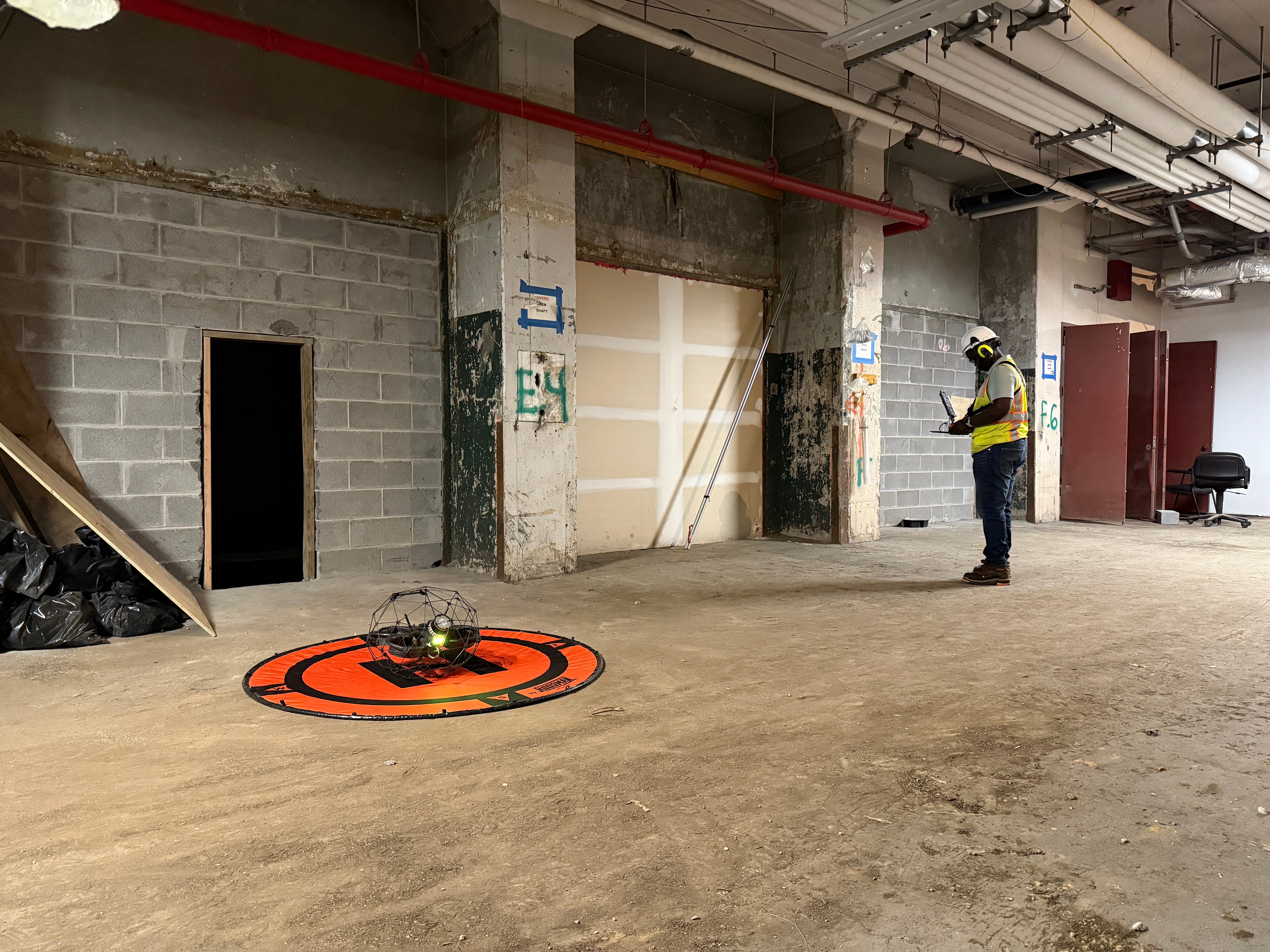
The Elios 3 was already part of Gedeon GRC’s Drones & Robotics Services program before this project. The team uses it for inspection, mapping, and reality capture across infrastructure projects where access presents a challenge. They have successfully deployed the Elios 3 for multiple infrastructure projects, including elevator shaft inspections and wastewater network surveys. Testing AutoScan on a road bridge gave Gedeon GRC an opportunity to assess how automated photogrammetric image capture could fit into that existing work.
For the bridge inspection, Gedeon GRC brought together its Bridge Engineering, Drones & Robotics Services, and BIM/VDC teams. The bridge team identified components that needed close examination; the Drones & Robotics Services team planned the data collection; and the BIM/VDC team assessed whether the imagery could support work beyond the inspection. Many of the target components were located above a freeway, where conventional access could require lifts, under-bridge inspection equipment, or lane closures. The teams wanted data that could help document the bridge’s condition and potentially support future engineering and modeling work while minimizing disruption to traffic flow and keeping the team safe.
Why the Elios 3 and AutoScan?
AutoScan is an automated image acquisition workflow for the Elios 3 that was launched in October 2026. The workflow is simple: the pilot defines a surface and selects the scan parameters; the drone then autonomously follows a systematic path and captures images at regular intervals. This helps produce the consistent coverage and image overlap needed for bridge photogrammetry, while reducing the amount of data capture the pilot must manage manually.
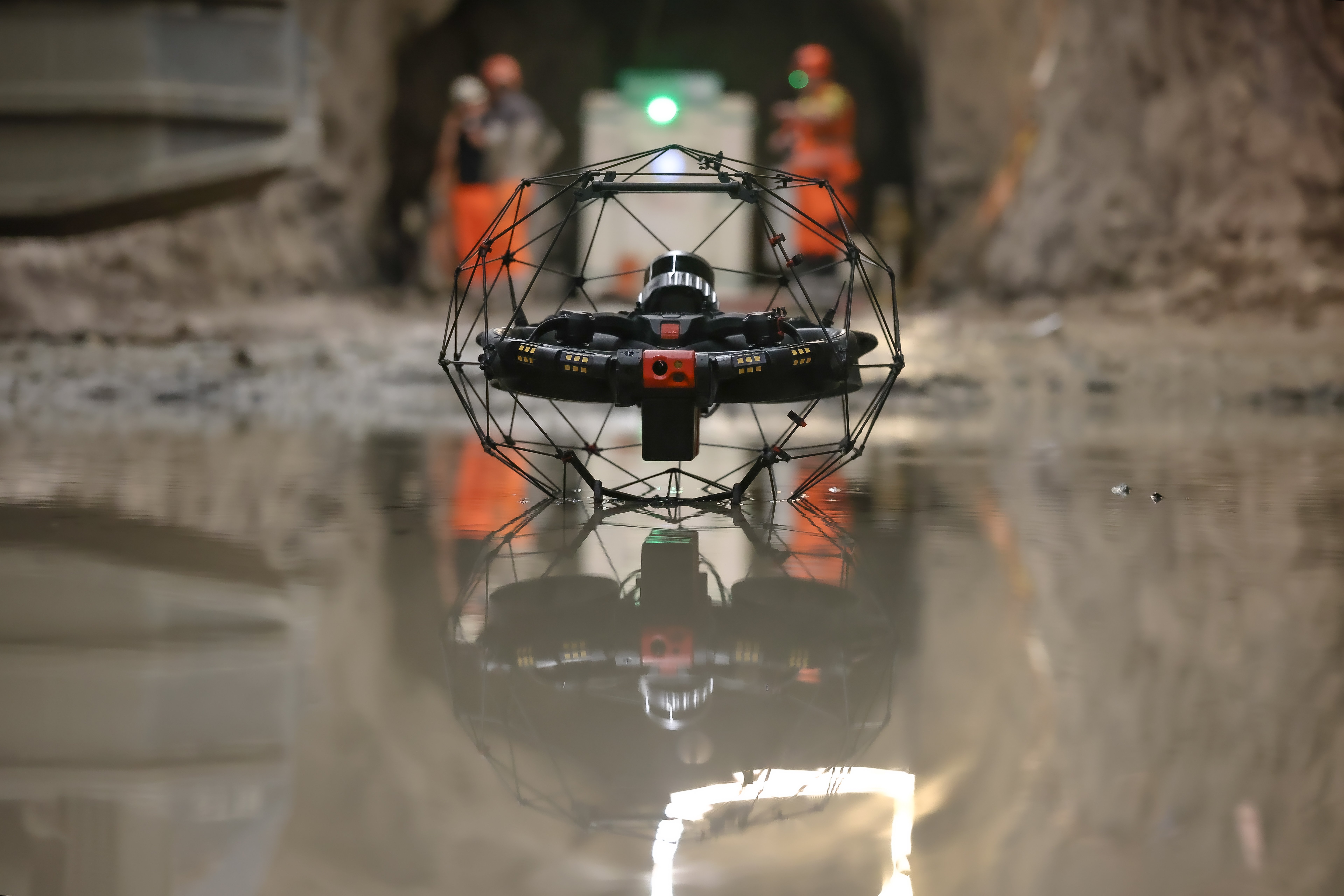
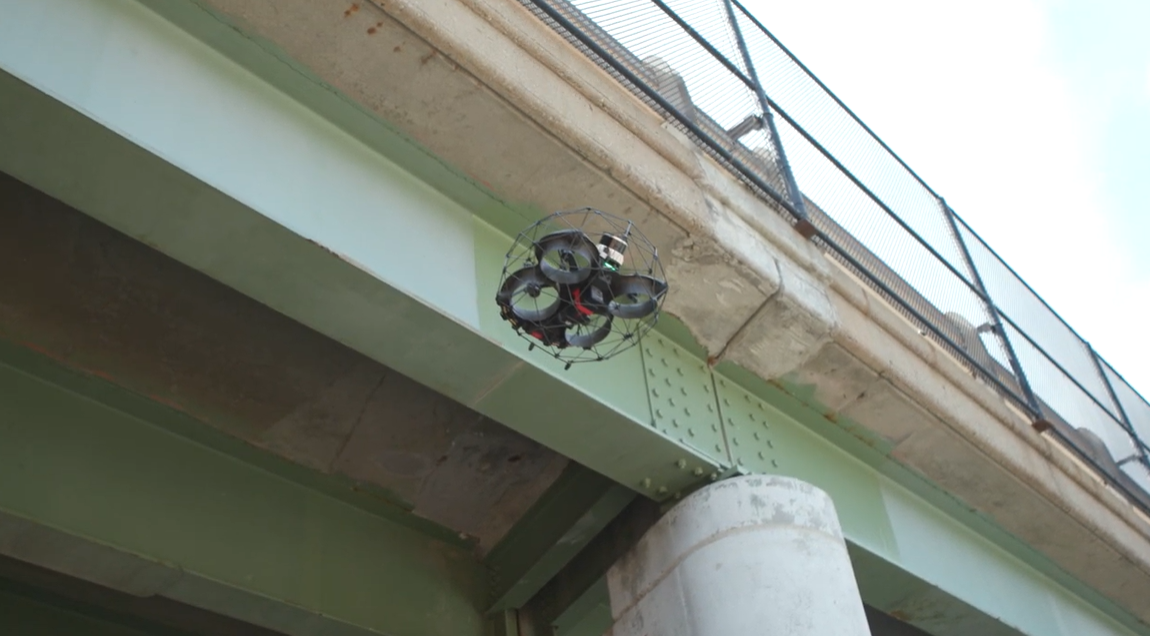
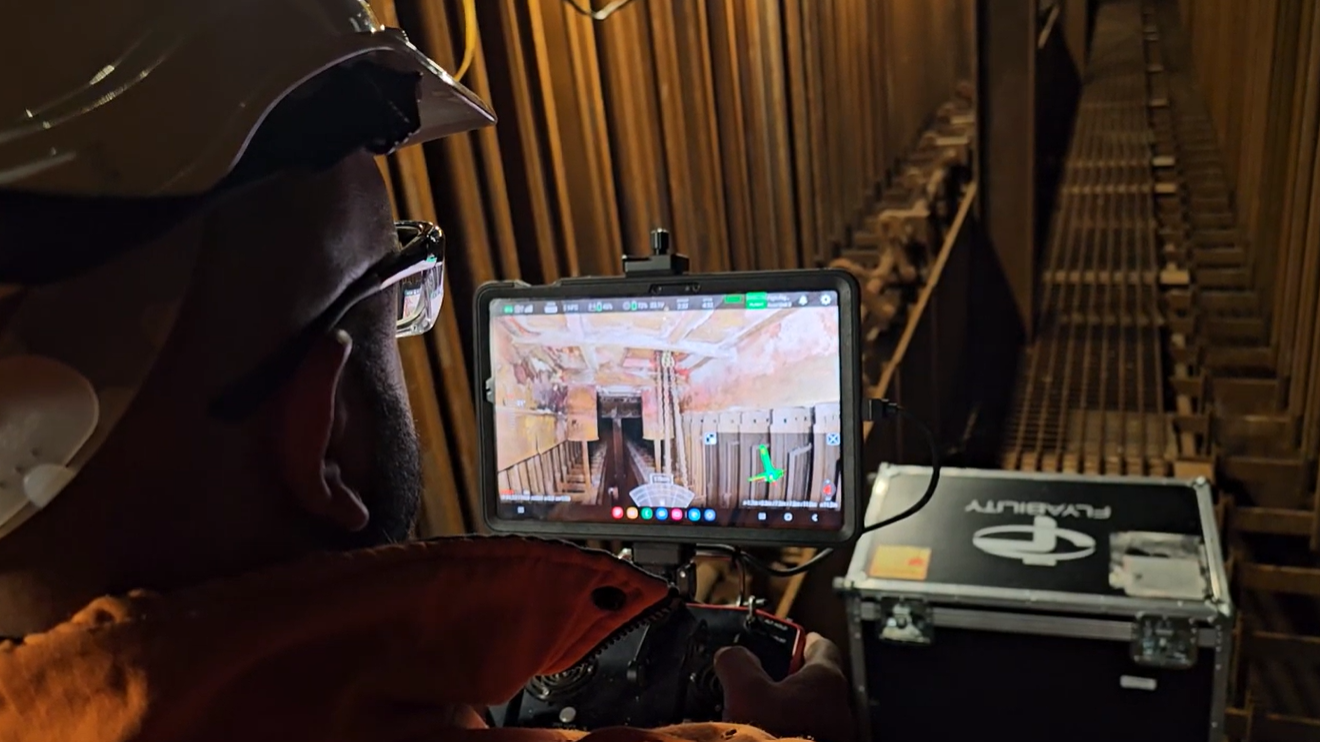
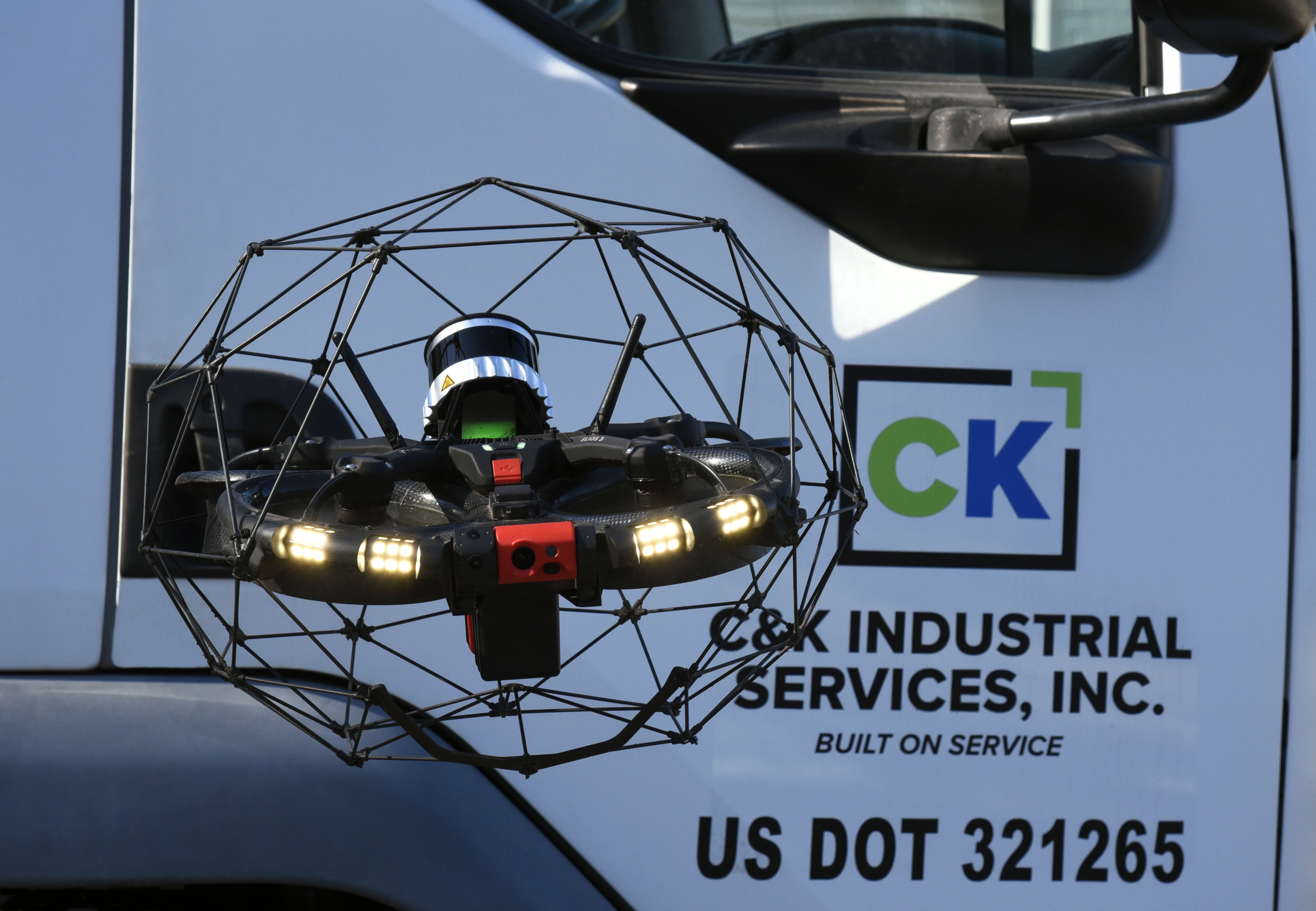
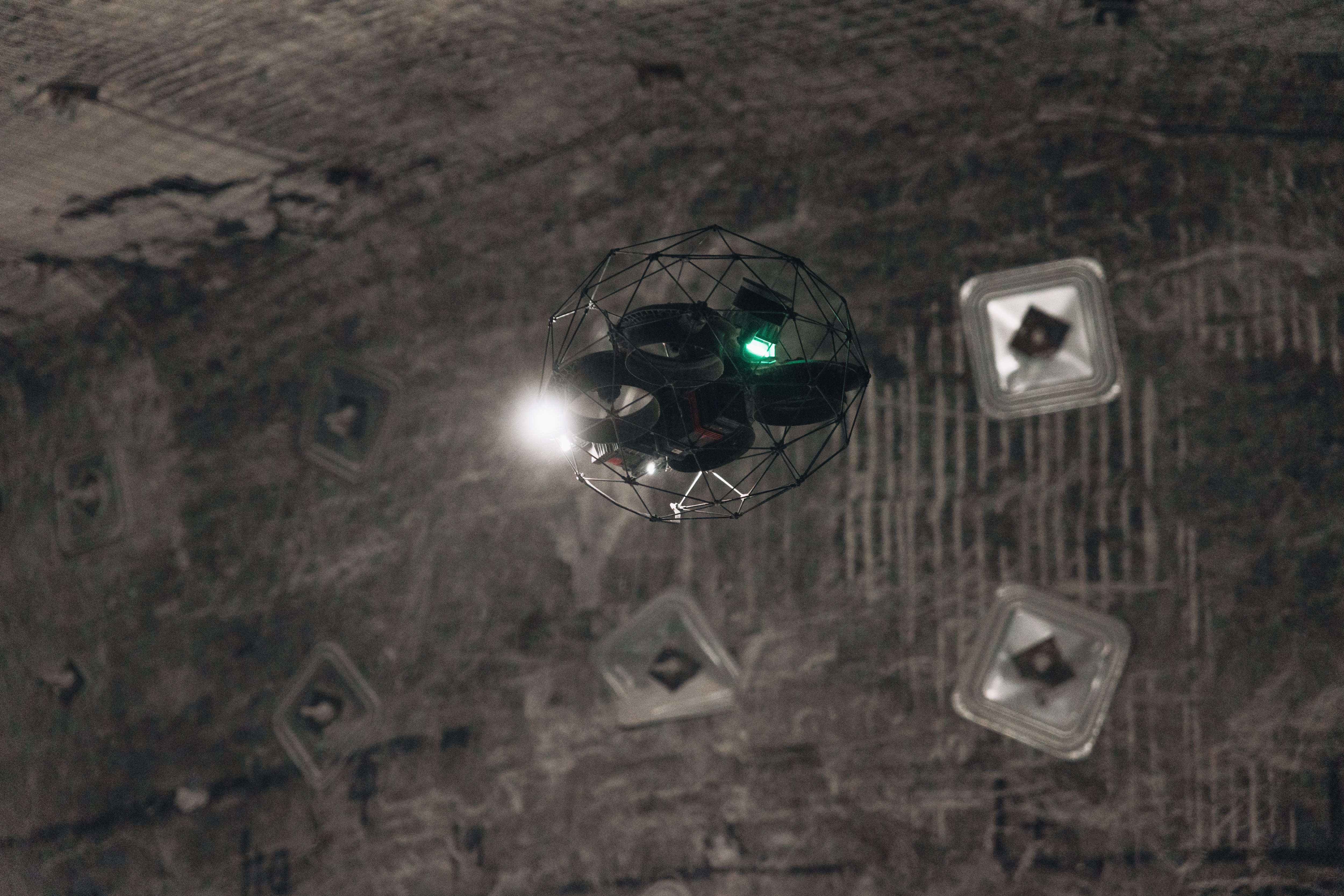
The Elios 3 was well suited to Gedeon GRC’s bridge project because it could fly close to components above the road that would be difficult to reach with conventional access equipment. Its protective cage supported close-range inspection, while its visual and LiDAR capabilities allowed the team to document the structure. AutoScan added systematic photogrammetric image capture to a mission that also included inspection and mapping.
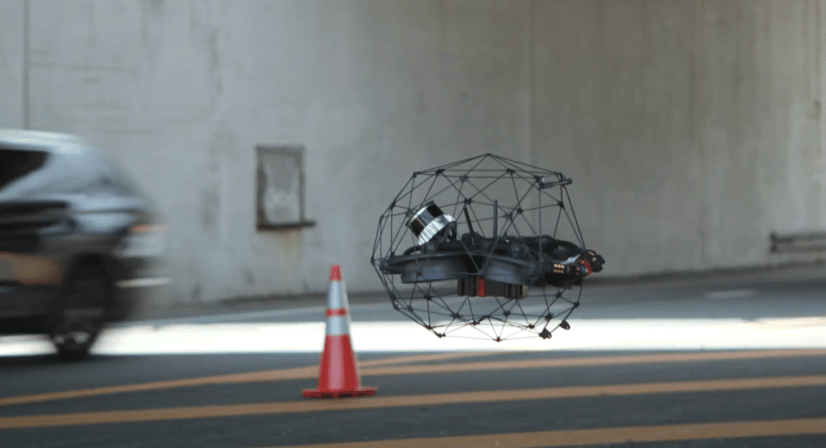
Elios 3 in action
How Gedeon GRC Used AutoScan on the Bridge
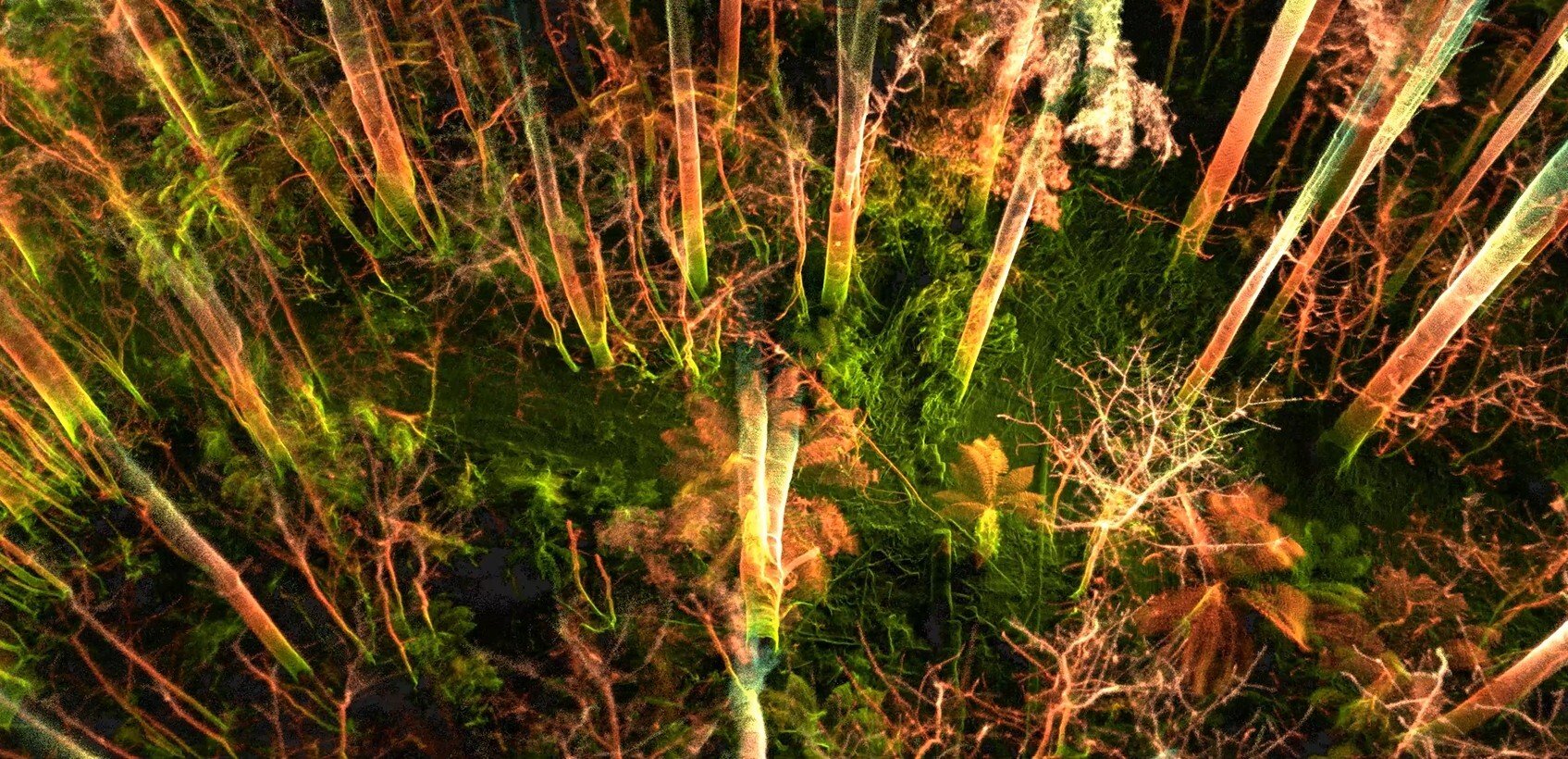
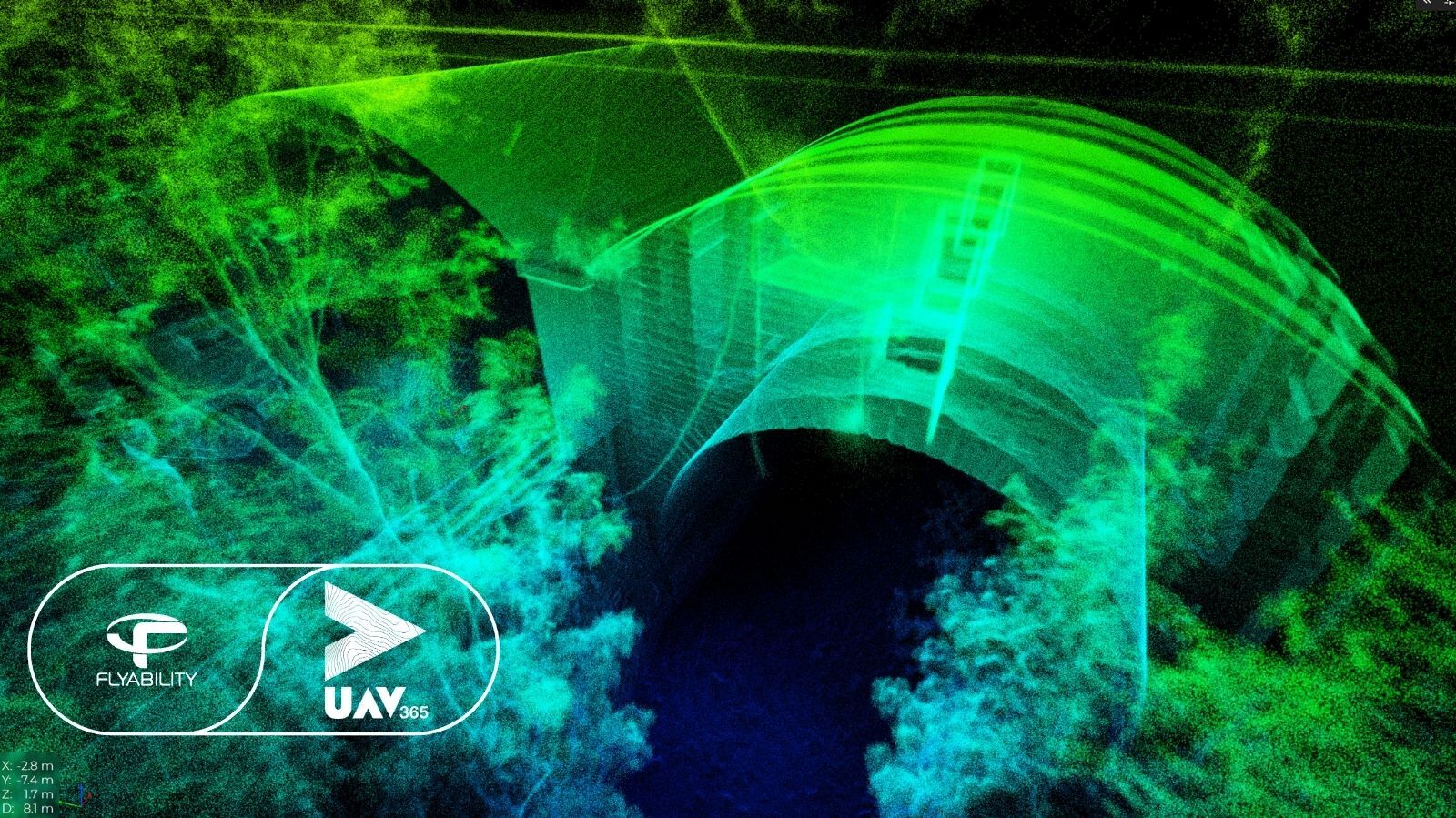
Gedeon GRC’s Bridge Engineering and Drones & Robotics Services teams began by identifying components that would be difficult or costly to access using conventional inspection methods. Following preflight checks, the Drones & Robotics Services team mapped the project area with the Elios 3 Surveying Payload. This established a LiDAR baseline for the subsequent data work.
The Elios 3 pilots then flew close to the structure to assess the underside of the concrete deck, concrete abutments, pier caps, expansion joints, bearing seats, steel support beams, diaphragms, cross frames, and connection points. During the inspection, the team collected high-resolution imagery and video, as well as LiDAR and UT data. Gathering these different types of data during the deployment gave the engineering teams a broader record of the bridge than photographs alone.
After the first visual assessment, the pilots used AutoScan to capture photogrammetric images of selected components, including girders, diaphragms, connections, bearings, and concrete elements. AutoScan coordinated the flight path and image capture to provide systematic coverage. Gedeon GRC’s BIM/VDC team then evaluated the resulting datasets for measurements, existing-condition documentation, and future bridge Scan-to-BIM workflows.
This approach also has the potential to reduce the time and cost of documenting hard-to-reach bridge components. The Elios 3 can collect data without positioning inspectors beside every element, which may reduce reliance on specialized access equipment and lane closures. During image capture, AutoScan handles the flight pattern and photo spacing that a pilot would otherwise manage manually.
What the AutoScan Evaluation Showed
For Gedeon GRC, the pilot showed how bridge inspection workflows could incorporate automated photogrammetric image capture using AutoScan to collect consistent, repeatable datasets. Instead of treating photogrammetric capture as a separate task, the team collected the imagery after its visual assessment, alongside the LiDAR and other inspection data gathered during the project.
Each team saw value in the result. Bridge Engineering gained detailed data from components that are difficult to examine up close, with a systematic image record that could support future assessments. Drones & Robotics Services evaluated the potential to integrate mapping, close-range inspection, and automated image acquisition within a single field workflow. The BIM/VDC team received imagery to assess for measurements, existing-condition documentation, and future model development.
This matters because an inspection and a modeling project do not always call for the same field data. Gedeon GRC explained that teams have historically had to balance capturing what engineers need to assess an asset with collecting imagery and measurements useful for documentation. By bringing these datasets together, the pilot created a common digital record that the teams could review and use to plan further work. For Gedeon GRC, AutoScan’s most promising contribution is making automated image capture more consistent and easier to include in future bridge inspections and Scan-to-BIM workflows.
Moving Towards Automated Data Capture for Drone Bridge Inspections
For Gedeon GRC, this project provided an opportunity to evaluate how automated photogrammetric capture could be integrated into future bridge inspection workflows. AutoScan helped the team collect consistent imagery from difficult-to-access components and assess how it could contribute to a shared record of the structure’s existing condition.
For Gedeon GRC, the value of these advances lies in the information they can provide to engineers and clients. More systematic capture in the field could give teams a clearer picture of existing conditions and better support the decisions that follow.

.jpg)
-Jan-16-2026-10-59-56-8006-AM.png)
.jpg)
.png)