Oil & Gas
 Maritime
 Power Gen
 Chemicals
 Mining
 Sewers
 Cement
 Nuclear
 Infrastructure
.svg) Transportation
Transportation


 EN
EN
The Future of Offshore Integrity: MaDfly Performs Class Inspection with a RINA Surveyor on a Saipem FPSO Using Flyability’s Elios 3 UT
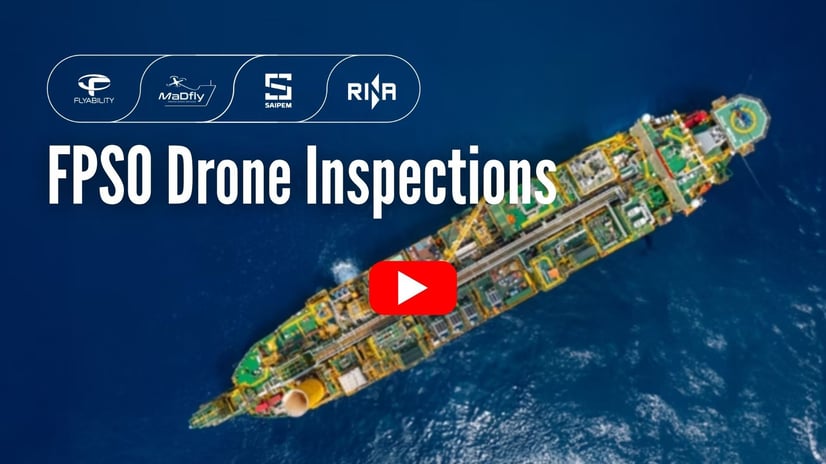
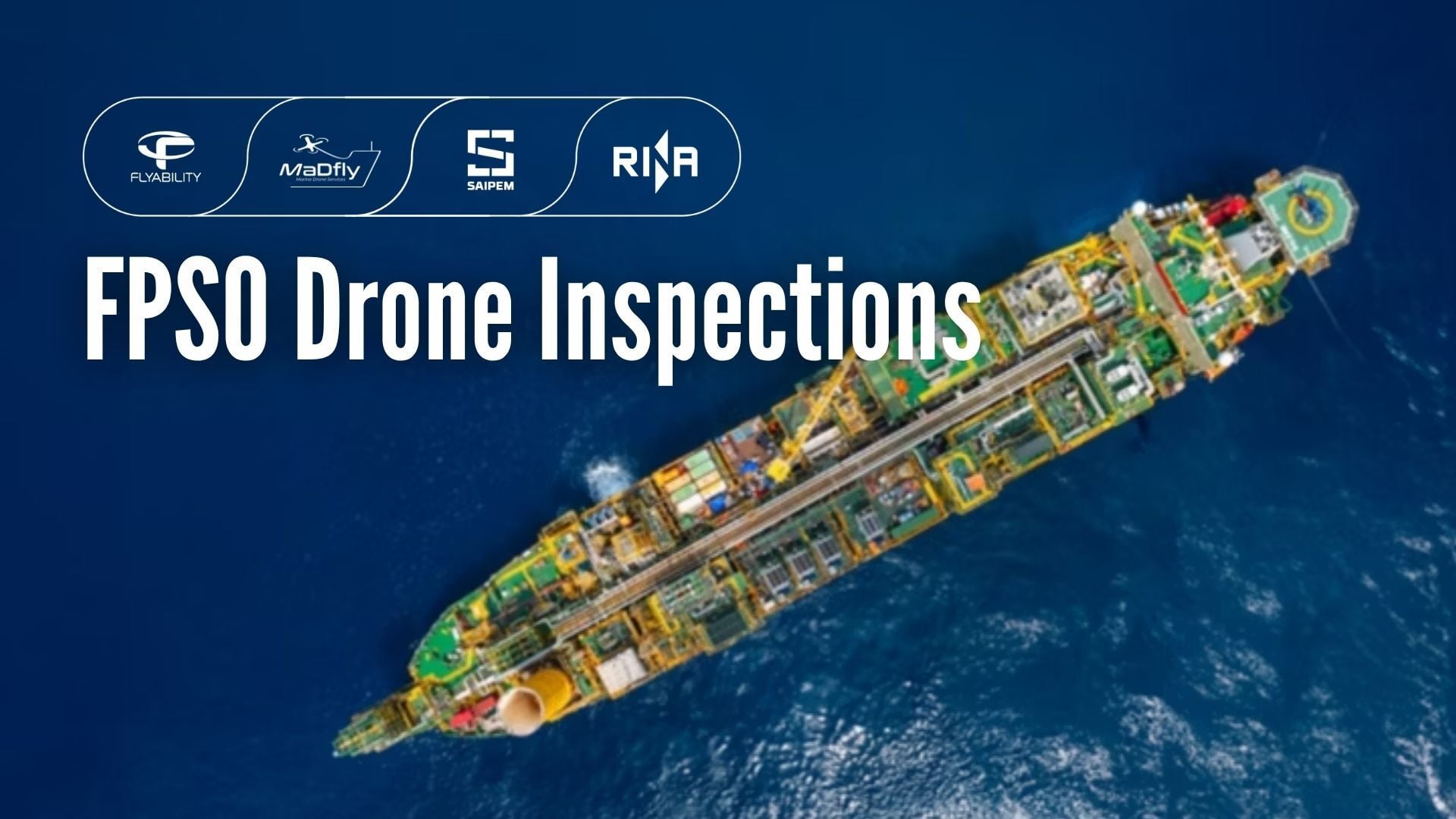
MaDfly, an offshore drone inspection specialist, successfully conducted a class-approved drone inspection, collecting all necessary ultrasonic thickness measurements (UTMs) and close visual inspections (CVIs) on the FPSO Baleine with zero human entry. Managed by Saipem for ENI in the Ivory Coast’s Baleine field, this deployment represented a critical milestone under Saipem's operations, maintenance, and facility life extension scope. Evaluated and verified by the classification society RINA, the trial project aimed at verifying whether advanced Remote Inspection Techniques (RITs), like UT drones, could be suitable inspection tools for FPSOs, capable of replacing human entry in confined spaces. The test conducted on the Baleine FPSO demonstrated that drone-based inspections in confined marine spaces can match or even outperform traditional inspection methods across safety, data accuracy, and operational efficiency.
Benefits In A Nutshell
|
Safety Drone inspections helped eliminate 100% of the hazardous scaffolding and rope climbing for the surveyors inside the COTs and WBTs. |
Access Using drones removed the need for scaffolders, which relieved pressure on the vessel's strict 76 maximum POB limit. |
|
Data Quality The Elios 3 UT was able to collect all of the visual and UTM data required inside the tanks and met the quality required by RINA surveyors. |
Speed MaDfly pilots collected 476 UTMs inside the COTs in just 13 hours and performed a CVI of the ballast tanks in under 6 hours. |
Leveraging Drones for FPSO Tank Surveys
Aboard the FPSO Baleine, a survey was conducted in order to verify the capability of drone inspections compared to standard surveys with annual criteria. The project relied on close collaboration between three key entities: Saipem, the international engineering and offshore service company managing the FPSO; MaDfly, a specialized marine drone service provider leveraging confined-space robotic inspections; and RINA, the international marine surveying and certification body responsible for validating the drone's data collection against strict annual class criteria.
The drone inspection was carried out on the Baleine, a refurbished unit located offshore the Ivory Coast, which was originally named the Firenze and is currently owned by Italian oil and gas giant ENI. The FPSO processes between 12,000 and 18,000 barrels of oil per day (bopd) and 17.5 million cubic feet of gas per day. Its maintenance, refurbishments, replacements, upgrades, and life extension are managed by SAIPEM.
The facility operates with a highly restricted maximum Person on Board (POB) capacity of just 76 pax. Because bed space on an active production unit is at a premium, minimizing the logistical footprint of visiting inspection crews is an operational necessity.
Watch the interview with experts from MaDfly, SAIPEM, and RINA to learn more about the trial:
The Challenge: Traditional FPSO Tank Inspections
Regular structural inspections of FPSOs are mandatory to comply with class and maintenance requirements. IMO guidelines require complete GVI (general visual Inspections), CVI (Close-up Visual Inspections), and UTM (Ultrasonic Thickness Measurments) inspections to be carried out on a periodic basis to guarantee the safety of the vessel. However, traditional surveys of an FPSO's massive internal structures, specifically the Cargo Oil Tanks (COTs) and Water Ballast Tanks (WBTs), are a very challenging task that can put people in danger and require the facility to be offline for several days or even weeks.
Traditional means of access generally involve erecting massive scaffolding networks or deploying specialized rope-access teams. This manual approach forces multiple personnel to spend days inside hazardous confined environments and can strain productivity due to significant asset downtime. Furthermore, the large crew size required for traditional inspections places an intense strain on the vessel's tight POB ceiling.
For this reason, UT drones have emerged as a suitable solution to the challenges faced by FPSO surveyors and maintenance teams. “We decided to work with MaDfly for the inspections because we wanted a safer, faster, and more efficient inspection method,” says Wassim Aouini, Marine Operations Lead at SAIPEM.
.jpg?width=826&height=526&name=Rope-Access%20COT%20Inspection%20(AI).jpg)
Rope-access technician performing a UT inspection in a vessel’s COT.
The Solution: FPSO Drone Inspections
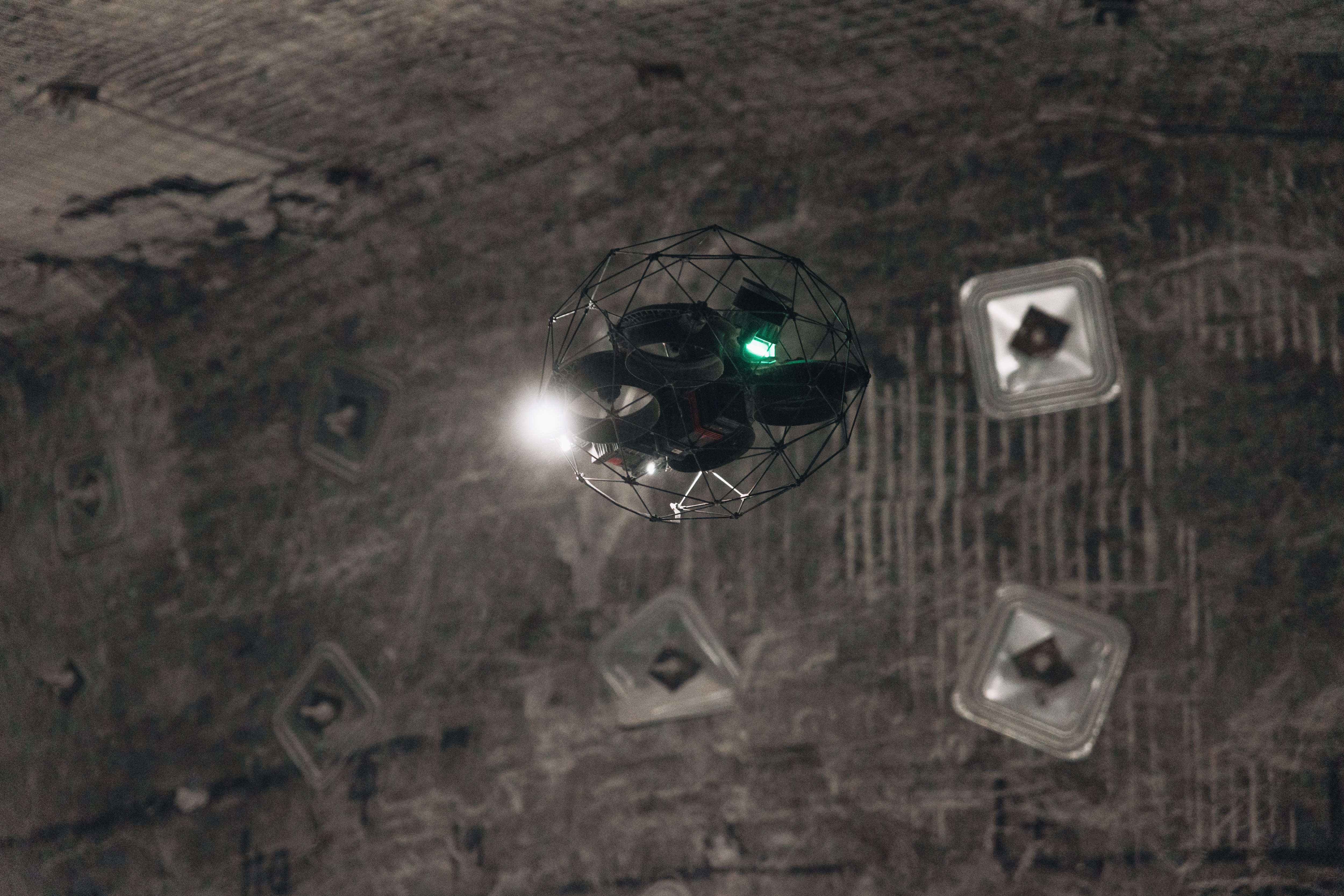
To tackle the risks of confined space entry and the lengthy time required for tank inspections with rope access, Saipem decided to leverage MaDfly’s extensive offshore experience with the Flyability Elios 3 UT drone. The mission aimed at comparing the quality and speed of standard inspection methods, namely rope access, with remote drone surveys and targeted two distinct internal environments: a General Visual Inspection (GVI) and Close Visual Inspection (CVI) of a Water Ballast Tank (WBT), alongside a high-resolution visual survey and over 450 UTMs (Ultrasonic Thickness Measurements) inside a Cargo Oil Tank (COT).
The entire inspection was conducted remotely, requiring zero human entry inside the tanks. Throughout the execution, a RINA class surveyor sat directly alongside the MaDfly drone pilots, auditing data quality in real time via a dedicated tablet to ensure immediate compliance with class standards.
“Our approval is a comparison of this type of technology with the standard survey, and we can observe in some cases that this type of technology is better,” says Mirko Giuliani, Offshore Marine Surveyor at RINA, who was onboard the Baleine during the trials.
See here what RINA has to say about using Remote Inspection Techniques offshore: https://youtu.be/A-PHkS4qTQc
.jpg?width=826&height=551&name=Andre%20and%20Mirko%20(RINA).jpg)
Mirko Giuliani and Andrea Leboffe from the RINA floating offshore department with the Elios 3 drone.
UT Drone Inspection vs Traditional Inspection
The deployment on the Baleine FPSO provided a direct, real-world comparison between traditional surveying, like rope-access, and the Elios 3 UT drone solution. The operational differences across both structural environments highlight a stark shift in efficiency, safety, and logistical footprint.
MaDfly is a leading drone service provider certified by major class societies like RINA, ABS, Bureau Veritas, DNV, Lloyd’s Register, and ClassNK. They decided to invest in Maritime UT Drones because they knew very well the difficulties of inspecting marine vessels with traditional means, and UAVs were becoming an accurate method for inspecting confined spaces. After testing several drone solutions, they decided to go for the Elios drone because “the Flyability drone was the most accurate and most reliable drone on the market for confined spaces in the maritime and offshore industry,” says Thierry Guillot, Co-Founder & CEO at MaDfly.
MaDfly was hired by Saipem to complete a drone inspection on their FPSO and help them evaluate the benefits of drone inspections compared to standard surveys with annual criteria. The inspection took place across two days and was able to completely substitute physical human entry inside the tanks with Remote Inspections. The trials took place across two main areas of the FPSO: Cargo Oil Tanks (COTs) and Water Ballast Tanks (WBTs). “We did all the inspection with a class surveyor beside us. From the very beginning, he was very impressed about the quality of the data [collected by the Elios drone],” says Thierry.
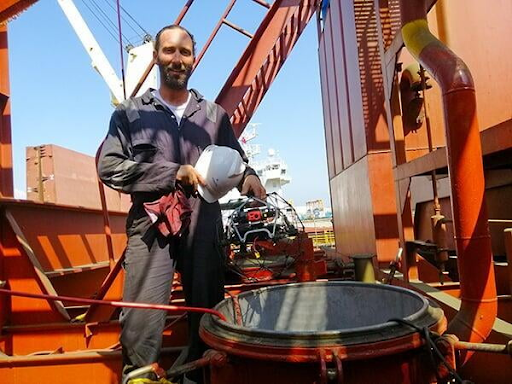
Thierry Guillot with an Elios drone prior to a vessel’s tank inspection.
FPSO Drone Inspection: “Less People, Less Time”
Traditional inspections of a Water Ballast Tank (WBT) typically require a team of 3 to 4 technicians plus the RINA class surveyor to enter the tank and carry out the inspection across 4 to 6 days of operation. In contrast, MaDfly with the Elios drone completed the exact same inspection scope in just 6 hours, saving countless hours of downtime for Saipem. In addition, the drone inspection only required 2 drone personnel plus the surveyor, immediately freeing up crucial bed space on the asset.
For a Cargo Oil Tank (COT) inspection, the Elios 3 UT successfully captured 476 precise Ultrasonic Thickness Measurements (UTMs) and all the required visuals across the COT shell in just 15 hours of operation. Something that would have required 6 to 7 days to complete with manual surveys. The speed of the deployment was also highlighted by an onboard rope-access UT expert, who observed that the drone accomplished more structural mapping in its first 30 minutes than a climbing team could achieve in 2 full days of physical rigging.
.jpg?width=1920&height=1080&name=Manual%20VS%20Drone%20FPSO%20Tank%20Inspection%20(2).jpg)
Comparison image of a rope access inspection and a drone inspection of an offshore tank.
So how did traditional inspection compare to remote drone inspections with MaDfly:
|
Rope Access |
Elios Drone |
|
|
WBT Inspection Time (Visual) |
4 – 6 Days |
6 Hours (- 90%) |
|
COT Inspection Time (Visual + UT) |
6 – 7 Days |
15 Hours (- 80%) |
|
Human Entry |
Hazardous Human Entry |
0 Human Entry |
|
Personnel |
3 – 4 Technicians + Surveyor |
2 Pilots + Surveyor |
|
Class Approved |
Yes |
Yes |
|
Digitized Data |
No |
Yes |
*This data has been verified by Saipem and MaDfly experts
Class Verification & Technical Findings (RINA)
RINA’s onboard surveyor validated the technical parity between drone data collection and rope access. “We observed very good quality and accuracy of the imaging that we can observe with the dedicated tablet for the surveyor on board. We tested the capability of the UT on the drone with a model Elios 3 in a crude oil tank with more or less 500 thickness measurements, and we observed that the quality of UT is very very high,” says Mirko Giuliani, Offshore Marine Surveyor at RINA.
The surveyor noted zero data capture gaps or technical boundaries despite the significant age of the vessel, but mentioned that prior surface cleaning and preparation are essential for a successful UT drone inspection. Consequently, RINA officially validated the technology, concluding that it met all standard criteria and explicitly noting that in specific structural contexts, the drone's data accuracy was superior to manual human deployment thanks to the improved safety and digitalization it can offer. However, it is critical that, depending on the situation, the data collected by the drone is equivalent to manual inspections.
Find out more about RINA’s view on Remote Inspection Techniques here.
Conclusions on FPSO Drone Inspections
The deployment on the Baleine FPSO confirmed that drones are an effective inspection solution for offshore facility life extension programs and marked a pivotal shift in offshore asset management. MaDfly, Saipem, and RINA successfully demonstrated that the Elios 3 UT drone can help solve some of the industry's greatest inspection challenges: personnel safety, data digitalization, and asset downtime. Ultimately, the greatest achievement of the Baleine FPSO inspection pilot was the elimination of high-risk human labor in hazardous environments. By replacing traditional scaffold builders and rope climbers with remote drone inspections, this project sets a new benchmark for offshore safety.
Reductions in inspection timelines from several days to just a few hours represent a massive operational victory for Saipem, translating directly to minimized asset downtime and increased productivity. With this success, Saipem intends to scale drone inspections across its global fleet of offshore vessels.
Find out more about offshore drone inspections: https://www.flyability.com/oil-and-gas-drones.
.jpg)
-Jan-16-2026-10-59-56-8006-AM.png)
.jpg)
.png)